Evaluation Metrics and Optimization Strategies for Routing Protocols in Resource-Constrained Wireless Sensor Networks
Ahmed A. Al-Healy1, Qutaiba I. Ali1
1Computer Engineering Department, Collage of Engineering, University of Mosul, Mosul, Iraq
Corresponding Author:Ahmed A. Al-Healy (e-mail: ahmed.23enp114@student.uomosul.edu.iq)
DOI: https://doi.org/10.59461/ijdiic.v4i2.183
Article history: Received March 10, 2025, Revised April 29, 2025, Accepted May 04, 2025
ABSTRACT
Wireless Sensor Networks (WSNs) are indispensable for current applications, such as smart cities, industrial automation and environment monitoring. However, the performance of these networks is heavily dependent on the routing protocols used, especially given the strict limitations on energy, memory, and processing power in sensor nodes. This study presents a detailed evaluation of routing protocols designed for resource-constrained WSN nodes with a focus on energy efficiency, computation overhead, communication performance, scalability and security. A comparable study for the most popular routing protocols such as LEACH, AODV, DSDV, PEGASIS, and GPSR was performed to highlight the compatibility of such protocols with variety of WSN applications. Various optimization techniques to enhance the efficiency of the protocol are also introduced based on adaptive duty cycles, hierarchical clustering, hybrid routing paradigms, and lightweight security mechanisms. The vision and insights of this paper are to offer a good and well-organized ground for enabling and refining the selection of routing protocols for WSN implementation in the complex world of reality.
This is an open access article under the CC BY-SA license.

Keywords: Wireless Sensor Networks Internet of Things, Routing Protocols, Energy Efficiency, Network Scalability
1. INTRODUCTION
WSN represents one of today's most significant technological advances by allowing fresh insights into monitoring and controlling the physical world. Small sensor nodes make up these networks, sense, process and communicate the information [1]. WSNs have the common characteristic that A unique centre, like the base station, will receive transmitted data gathered from the environment for processing and decision-making. Applications of these networks extend to multiple fields, including environmental monitoring. Healthcare, industrial automation, and military applications [2]. Deploying these networks remotely or using sensor networks in hazardous areas supports live data collection, which enhances operational efficiency and provides beneficial information. Insights into various conditions [3]. These systems possess wireless communication abilities combined with scalable features, which make them appropriate for environments where wired networks cannot be used. These systems work well in situations where wired networks cannot function effectively. The quick progression of the Internet of Things (IoT) has led to faster deployment of WSNs than ever before. WSNs have been deployed at unprecedented depths throughout history to facilitate a diverse range of applications [4]. Through the IoT, Internet connectivity enables sensor nodes to facilitate global data transmission openness to interwork with other IoT devices. The growing interdependence between systems enables the development of far more sophisticated applications. The IoT enables advanced applications like smart agriculture, smart cities, and smart healthcare, among other areas. Integration of the WSN system with IoT leads to the most connected world where real-time transmission of data enables predictive analysis, intelligent decision-making and automation [5] [6].
Routing has a crucial impact on the performance, scalability and lifetime of WSNs. Due to the limited Routing, it plays an important role in the performance, scalability and lifetime of WSNs. Because of the resource constraints, including energy, processing power, and storage capacity of sensor nodes, path routing algorithms should be optimized to enhance data transfer success while reducing latency and prolonging the lifetime of the whole network. Energy efficiency and scalability/topology adaption for changes are issues that must also be considered when designing WSN routing protocols [7]. Further developments of the WSN, as well as their integration into the IoT, have also increased the demand for effective routing protocols for processing the increased data traffic and complex topology schemes [8].
Although there are massive research works on routing protocols of WSNs, this paper presents a complete multi-metric evaluation framework for the first time to make a balanced and holistic comparison among energy, CPU, PDR, control overhead and delay, providing a more extensive and reasonable performance analysis than most prior works which often focus on a single or limited set of metrics. In addition, unlike earlier studies that compare protocols in isolation, this work maps each routing protocol's strengths and weaknesses to specific application contexts such as energy-constrained monitoring, latency-sensitive alerts, or high-reliability industrial environments. This alignment bridges the gap between theoretical protocol design and practical deployment needs, making this comparison highly actionable for real-world WSN applications. Thus, the novelty of this study lies not in proposing a new protocol but in its cross-layer, application-oriented comparative analysis that provides actionable recommendations for WSN design under real constraints. This paper aims to:
- Define a comprehensive set of evaluation metrics for assessing routing protocol performance in resource-constrained WSNs.
- Compare and analyze major routing protocols in terms of energy consumption, CPU utilization, packet delivery ratio (PDR), control overhead, and forwarding delay.
- Classify routing protocols based on WSN use cases, such as energy-limited, real-time, large-scale, mobile, and security-sensitive networks.
- Propose optimization strategies to enhance the efficiency of routing protocols by minimizing energy consumption, reducing latency, improving scalability, and securing communication.
- Provide recommendations for selecting appropriate routing protocols based on specific network constraints and application requirements.
2. MOTIVATION
The backbone of today's technology is the Wireless Sensor Networks (WSN), which are used for environmental monitoring, medical applications, and smart-city infrastructure [9]. Due to the dynamic nature and inherent bottlenecks (e.g., low memory capability, energy shortage, etc.), intensive efforts are devoted to improving their performance. Routing is one of the most important research areas in WSNs because it affects network performance and lifetime to a great extent [10]. To quantify the most recent studies on this topic, an analysis of the publications of Google Scholar during 2015–2024 was performed. The aim was to systematically quantify the annual emergence of novel routing protocols, thereby illustrating the field's ongoing evolution. The search was conducted utilizing an advanced search method with the Boolean expression shown below:
intitle: "wireless sensor networks" OR intitle: "WSN" AND intitle: "routing" AND (intitle: "protocol" OR intitle: "algorithm") -intitle: "review" -intitle: "survey" -intitle: "study"
By adopting the above method, only papers presenting novel routing algorithms were considered, thus avoiding including surveys, reviews and position papers. During 2015–2024, 3,047 definite articles that were considered appropriate were retrieved from Google Scholar. These results indicate a continuous advance in research in WSN routing, in which new protocols are proposed every year, protocols are improved, and the bottlenecks present are faced with persistence. These trends are depicted in Figure 1, which shows the everlasting development process of WSN routing algorithms.
Although the Boolean search yielded a focused dataset, the screened keywords purposely were restricted for precision. The words "MODEL", "SCHEM", "NOVEL", "SELECTION", "STRATEGY", ,"PLAN"," "APPROACH", SOLUTION", "TECHNIQUES" or "PROPOSED" may have encompassed a more extensive array of studies. This indicates that the real quantity of innovative routing algorithms introduced during this timeframe is likely considerably greater.
Wireless Sensor Networks (WSNs) are formed by locally spread autonomous sensor nodes that observe environmental conditions such as temperature, sound, or pressure and cooperatively dispatch the gathered data to a base station [11 ]. The routing process in the context of sensor networks plays a vital role in enabling data transfer from nodes to a base station. However, due to the inherent constraints of sensor nodes like limited energy resources, processing capabilities, and memory constraints, WSN routing protocols must be well-designed to achieve the goals of energy efficiency, network lifetime prolongation, and reliable data transmission [12]. The main issues of Routing in Wireless Sensor Network include the following:

Figure 1. Annual Trend of Google Scholar Publications on WSN Routing Protocols (2015-2024)
Categories and Operational Mechanisms of WSN Routing:
Energy Efficiency: |
Sensor nodes are mostly battery-operated, so energy saving is of prime concern [13]. To prolong the network lifetime, routing protocols should minimize energy consumption [14]. |
Scalability: |
WSN can contain hundreds up to thousands nodes, and we need a routing protocol scaling properly with the network size [15]. |
Dynamic Topology: |
A node can fail, move, or new nodes can join the network, resulting in frequent changes in network topology. Routing protocols have to adjust accordingly to these changes to reduce such behaviour [16]. |
Data Aggregation: |
To save energy, many routing algorithms incorporate data aggregation methods which aggregate data from several sensor nodes before data sending [17]. |
QoS (Quality of Service): |
Some applications have specialized QoS requirements such as low latency, high reliability, and throughput, and routing algorithms must be capable of meeting these quality-of-service standards [18]. |
Security: |
WSNs are vulnerable to security threats such as node compromise and eavesdropping [19]. There should be inclusion of security features in the routing algorithms which ensures data confidentiality and integrity [20]. |
Absence of Global Addressing Scheme: |
Traditional networks adhere to a global addressing architecture, whilst this is not the case in WSNs, and data and node identification is problematic. Hence, most social-aware applications adopt location-based or data-centric routing protocols [15]. |
A comprehensive understanding of WSN routing protocols' classification framework is essential for assessing their design principles, practical applications and operational methodologies. The dominant classification framework categorizes routing protocols by network topology and divides them into flat, hierarchical and location-based groups [21][22]. These categories are defined as the following routing schemes:
Flat: |
Data packets navigate through the network using several hops between nodes that function identically. These routing methods maintain simplicity at the cost of substantial redundancy and increased energy usage. The SPIN protocol together with Flooding and Gossiping serves as examples [23]. |
Hierarchical: |
The hierarchical routing approach groups nodes into clusters led by cluster heads to aggregate and forward data while minimizing energy consumption and scalability. Examples are LEACH and PEGASIS [23]. |
Location-Based: |
Location-based routing protocols enhance data routing performance by using nodes' physical locations to direct data through nodes nearest to the target destination. Notable examples include GEAR and GPSR [24]. |
Apart from these traditional approaches, more hybridized models of clustering schemes for tackling certain nodes' issues and further understanding routing strategies have been addressed via the literature [25] [26] [27]. According to these studies, WSN routing protocols are categorized according to application type, delivery style, network structure, path establishment, reliable Routing, network topology, communication model, and next-hop selection, as depicted in Figure 2. These classifications provide a more in-depth understanding and perspective of the behaviour of these protocols in varying scenarios.
For example, application-specific protocols utilized in these Networks may be classified as time, event, query or hybrid-driven, with each classification meticulously addressed to enhance data acquisition in response to particular stimuli. Delivery mechanisms are distinguished between real and non-realtime protocols to guarantee suitable levels of latency and precision. Strategies for route establishment, whether they are proactive, reactive, or hybrid in nature, dictate the methodologies through which routes are identified and sustained [28][29][30][31][32][33]. In a similar vein, classifications based on topology, encompassing flat, hierarchical and heterogeneous networks, significantly affect the performance of these networks and operational efficiency. To bolster resilience in data transmission, reliable routing mechanisms are contingent upon approaches grounded in Quality of Service (QoS) or multipath methodologies. Communication frameworks, including query-based, coherent or non-coherent, and negotiation-based systems, govern the interchange of data among nodes. Finally, strategies for next-hop selection, such as broadcast-based, location-based, content-based, probabilistic, and hierarchical methods, dictate the pathways through which data traverses the network. Collectively, these classifications exemplify the continuous advancement of routing strategies in WSNs to confront emergent technological and application-related challenges, as elaborated in the subsequent sections [34][35][36][37][38].
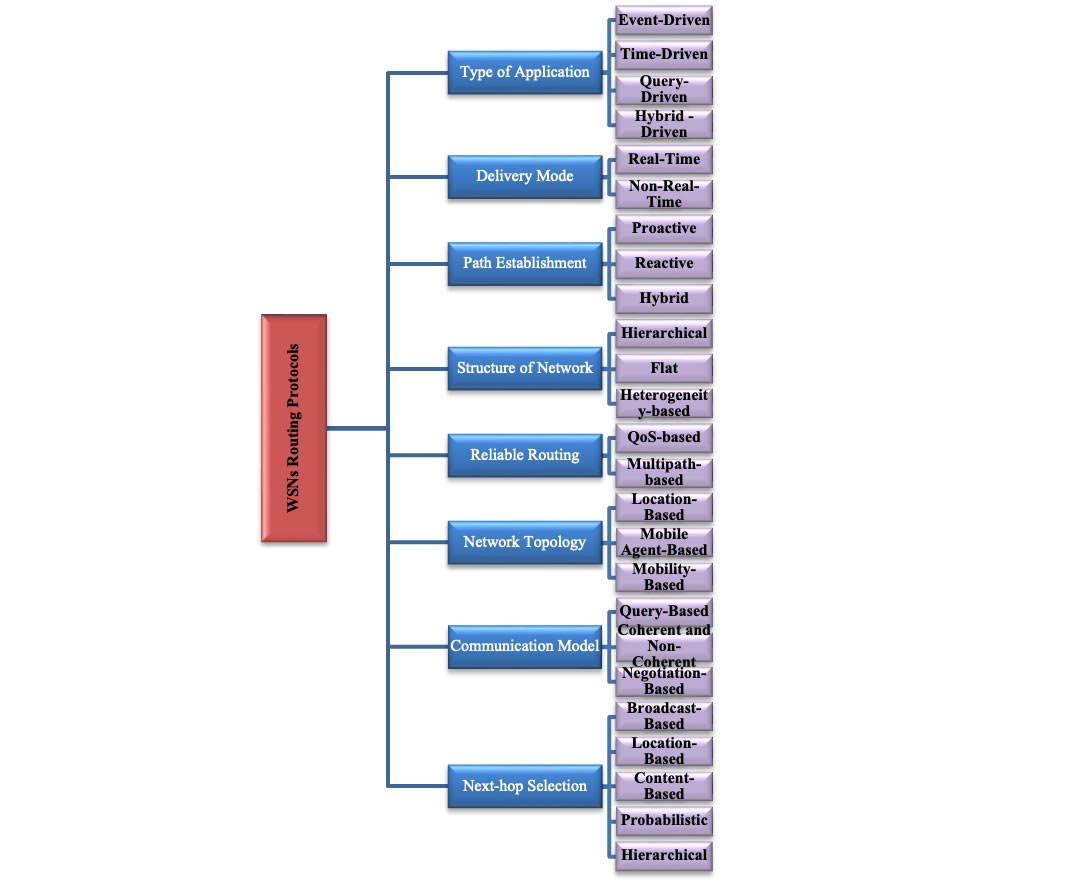
Figure 2. The classification of Routing Protocols as Adopted in this Review Paper
3. COMPARATIVE ANALYSIS AND OPTIMIZATION STRATEGIES FOR ROUTING PROTOCOLS IN RESOURCE-CONSTRAINED WSNS
Recent scholarly endeavours have markedly enhanced the design and assessment of routing protocols within Wireless Sensor Networks (WSNs), particularly addressing the dynamic challenges associated with energy consumption, node mobility, and scalability. Kandris et al. [41] delivered a comprehensive and contemporary survey on applications of WSNs, underscoring the significance of energy-efficient Routing in environments integrated with the Internet of Things (IoT). Sahar et al. The study by Sahar et al. [42] expanded the discussion through the exploration of bio-inspired and machine learning-based routing protocols, which offered advanced substitutes to traditional methods like AODV and DSDV. Batool et al. Batool et al. [43] analyzed LEACH, PEGASIS, and TEEN routes for agricultural IoT systems and demonstrated the effective energy advantages of hierarchical routing methods. In a similar vein, Goud et al. Goud et al. [44] evaluated multiple routing strategies using simulation metrics that measured Packet Delivery Ratio (PDR), latency, and energy consumption, specifically in smart IoT frameworks. Anwar et al. [45] concentrated on the complexities of Routing within mobile WSNs, where the variability in node mobility and energy necessitates adaptive and efficient routing solutions. These recent studies reinforce the importance of protocol-context alignment, which this paper builds upon by introducing a multi-metric evaluation framework tailored for diverse WSN scenarios.
3.1. Best Routing Protocols Based on Use Cases
Wireless Sensor Networks (WSNs) serve diverse applications, each with distinct requirements [39][40][41][42][43][44]. Table 1 presents an optimized selection of routing protocols based on network constraints and application demands.
Table 1. Optimal Routing Protocol Selection Based on Use Cases
Use Case |
Key Requirements |
Best Routing Protocol(s) |
Justification |
Energy-constrained networks (e.g., environmental monitoring, smart agriculture) |
Low power consumption, extended network lifetime |
PEGASIS, LEACH |
These protocols use data aggregation and clustering, significantly reducing energy consumption. |
Real-time applications (e.g., healthcare, industrial automation) |
Low latency, high Packet Delivery Ratio (PDR) |
PEGASIS, LEACH |
Fast packet forwarding (8-10 ms delay) and high PDR (92-95%). |
Scalable Networks (e.g., large-scale IoT deployments) |
Efficient operation with high node density |
GPSR, LEACH |
GPSR uses geographic-based Routing, reducing routing table size. |
Highly Dynamic Networks (e.g., military surveillance, vehicular WSNs) |
Fast route adaptation, fault tolerance |
AODV, GPSR |
AODV enables on-demand route discovery, adapting quickly to topology changes. |
Security-Critical Applications (e.g., industrial control, smart grid) |
Low control overhead, resistance to attacks |
PEGASIS, LEACH |
Lower control overhead (10-12%) reduces attack surface. |
3.2. Evaluation Metrics for WSN Routing Protocols
A rigid definition of performance metrics is required to measure the performance of different routing protocols in WSNs. These criteria can be useful to compare and evaluate the protocols for different operational conditions, including energy consumption, communication overhead, and network scalability. These performance metrics are commonly used for WSN:
Energy Consumption (µJ): Measure of total energy consumed by the network in communication and control overhead. Because WSN nodes are energy-limited, it is appealing to use protocols that consume low energy. This measure is very important for protocols, such as LEACH and PEGASIS, which aim to improve the energy utilization by clustering and aggregating the data.
CPU Utilization (%): The value is the computational load of the routing algorithm. High CPU utilization increases energy drain and limits the node's ability to perform other tasks. Protocols like AODV and DSDV related to route computation and table maintenance require increased CPU utilization. Because of their lightweight design, LEACH and PEGASIS are often more CPU economical.
Packet Delivery Ratio (PDR, %): PDR is a ratio of the number of successfully delivered packets to the number of transmitted packets. It is a key metric for evaluating reliability. Protocols like GPSR and PEGASIS, which use efficient path selection and aggregation, generally achieve high PDR values.
Control Overhead (%): It specifies the ratio of control packets (for route discovery and maintenance) to the total transmitted packets. Less over-head is helpful for the bandwidth and power saving. For example, protocols like LEACH and PEGASIS have relatively lower overhead because of organized Routing and AODV and DSDV may cause more overhead due to frequent update.
Packet Forwarding Delay (ms): This is the time spent on average by a packet for travelling between source and destination. If you are using this for latency critical applications, the lower the delay the better. The direct or near direct forwarding paths of PEGASIS and LEACH can have smaller delays compared to table-driven or reactive protocols such as DSDV and AODV that may delay while waiting for route discovery or maintenance.
3.3. Routing Protocols and Metrics Applicability
The considered metrics are applied differently to each protocol depending on their design and operational strategies:
AODV: |
Best evaluated using CPU utilization, control overhead, and delay due to its reactive nature and route discovery mechanisms. |
LEACH: |
Best evaluated with energy consumption, PDR, and delay, reflecting its cluster-based, energy-aware design. |
GPSR: |
Evaluated using PDR and packet delay, as it is designed for scalable geographic Routing. |
DSDV: |
Performance is influenced by control overhead and CPU usage due to periodic table updates |
PEGASIS: |
Best assessed through energy consumption, PDR, and delay, as it uses chain-based data forwarding to minimize communication cost. |
By aligning specific metrics with each protocol’s architecture, this study enables a meaningful comparison that highlights strengths and trade-offs for various deployment scenarios in WSNs.
3.4. Optimization Strategies for Routing Protocols
Despite their advantages, routing protocols often require enhancements to meet the demands of low-power, real-time, and large-scale WSN deployments. The following optimizations in Table 2 can improve their performance [39][40][41].
Table 2. Issues and Optimization
Routing Protocols |
Issue |
Optimization |
Energy Optimization for Low-Power WSNs |
Excessive energy consumption reduces node lifespan. |
Implementing adaptive duty cycling to increase the sleep-to-active ratio. |
Latency Optimization for Real-Time Applications |
High latency in some protocols affects time-sensitive data. |
Using priority queuing mechanisms for urgent packets. |
Scalability Optimization for Large WSN Deployments |
Routing tables become large and unmanageable in large networks. |
Use geographic-based Routing (GPSR) instead of maintaining large routing tables. |
Security Optimization for Attack-Resistant WSNs |
High control overhead increases vulnerability to network attacks. |
Reducing control packet exchange frequency to minimize exposure to attacks. |
3.5. Comparative Performance Analysis
To analyze and simulate the performance of routing protocols in Wireless Sensor Networks (WSNs), several key metrics are quantified using mathematical models derived from queuing theory, wireless transmission theory, and communication models [44] [45]. The following models listed in Table 3 represent the analytical basis for calculating the evaluation metrics used in this study.
Table 3. Mathematical Model of WSN Routing Protocols
Metric |
Equation |
Parameters |
Explanation |
Energy Consumption (µJ) |
E_total = E_tx + E_rx |
E_tx = E_elec * k + E_amp * k * d^η |
Estimates the energy consumed for sending and receiving packets. |
Packet Delay (ms) |
D_total = D_tx + D_prop + D_proc + D_queue |
D_tx = k / B |
The sum of transmission, propagation, processing, and queuing delays. |
Packet Delivery Ratio (PDR, %) |
PDR = Π (1 - P_loss_i), for i = 1 to h |
h = number of hops |
The probability that a packet is successfully delivered across all hops. |
Control Overhead (%) |
CO = (N_control / (N_control + N_data)) * 100 |
N_control = number of control packets |
Measures protocol efficiency in terms of non-data communication. |
CPU Utilization (%) |
U = (T_active / T_total) * 100 |
T_active = time spent processing protocol |
Indicates the processing burden placed on sensor nodes. |
To validate the suitability of different routing protocols, we present a comparative performance analysis in Table 4 and Figure 3.
Table 4. Performance Comparison of Routing Protocols in WSNs
Routing Protocol |
Energy Consumption (µJ) |
CPU Utilization (%) |
Packet Delivery Ratio (PDR, %) |
Control Overhead (%) |
Packet Forwarding Delay (ms) |
AODV |
120 |
30 |
85 |
18 |
15 |
LEACH |
80 |
15 |
92 |
12 |
10 |
GPSR |
95 |
25 |
88 |
15 |
12 |
DSDV |
110 |
28 |
83 |
20 |
14 |
PEGASIS |
70 |
12 |
95 |
10 |
8 |
3.6. Recommended Routing Protocol Selection
Based on the above evaluations, the most suitable routing protocol varies depending on the specific constraints of the WSN deployment. Table 5 summarizes the optimal protocol choice under different constraints.
The selection of an optimal WSN routing protocol depends on the specific constraints of the application. For energy-limited networks, PEGASIS and LEACH provide the best trade-off between efficiency and reliability. GPSR is highly suitable for large-scale networks, while AODV excels in dynamic environments. For security-sensitive applications, PEGASIS and LEACH reduce control overhead, lowering vulnerability to attacks. Future research should focus on further optimizing hybrid approaches that combine energy efficiency, low latency, scalability, and security to address the diverse challenges in real-world WSN deployments.
Table 5. Recommended Routing Protocols for Resource-Constrained WSNs
Network Constraint |
Recommended Protocol |
Justification |
Low Power Consumption |
PEGASIS |
Uses data aggregation, reducing transmissions. |
Low Latency (Real-Time Applications) |
LEACH |
Cluster-based structure optimizes packet forwarding time. |
Scalability (Large IoT Deployments) |
GPSR |
Uses geographic Routing, avoiding large routing tables. |
Mobility & Dynamic Networks |
AODV |
Quickly finds new routes when nodes move or fail. |
Security-Conscious Networks |
PEGASIS, LEACH |
Low control overhead reduces attack risk. |

Figure 3. Comparative performance analysis
4. CONCLUSION
Wireless Sensor Networks (WSNs) are integral to contemporary applications; however, their operational efficacy is hindered by limitations in energy resources, processing capabilities, and scalability of the network. This manuscript presents a comprehensive comparative analysis of various routing protocols, elucidating their advantages and disadvantages across diverse WSN contexts. Through a meticulous examination of parameters such as energy consumption, latency, CPU load, and security implications, we have discerned PEGASIS and LEACH as the most energy-conserving alternatives, GPSR as the optimal choice for scalable networks, and AODV as the most versatile for environments characterized by dynamism. In order to further enhance routing efficiency, strategies such as adaptive duty cycling, hierarchical clustering, hybrid Routing, and lightweight security frameworks were advocated. These enhancements ensure that protocols are more appropriately aligned for practical deployment, thereby augmenting network endurance, dependability, and data integrity. Subsequent investigations should prioritize the implementation and empirical evaluation of these protocols on actual WSN and IoT platforms to authenticate their performance beyond the confines of simulated environments. By addressing practical constraints, researchers can further refine routing protocols to enhance their applicability in large-scale, real-time, and security-critical WSN deployments.
DATA AVAILABILITY STATEMENT
Data sharing is not applicable to this article as no datasets were generated or analyzed during the current study.
CONFLICTS OF INTEREST
The authors declare that they have no conflicts of interest in this work.
REFERENCES
[1] H. M. A. Fahmy, Concepts, Applications, Experimentation and Analysis of Wireless Sensor Networks. in Signals and Communication Technology. Cham: Springer International Publishing, 2021. doi: 10.1007/978-3-030-58015-5.
[2] F. Ojeda, D. Mendez, A. Fajardo, and F. Ellinger, “On Wireless Sensor Network Models: A Cross-Layer Systematic Review,” J. Sens. Actuator Networks, vol. 12, no. 4, p. 50, Jun. 2023, doi: 10.3390/jsan12040050.
[3] Q. Ibrahim, “Enhanced power management scheme for embedded road side units,” IET Comput. Digit. Tech., vol. 10, no. 4, pp. 174–185, Jul. 2016, doi: 10.1049/iet-cdt.2015.0135.
[4] K. S. Adu-Manu et al., “WSN Architectures for Environmental Monitoring Applications,” J. Sensors, vol. 2022, pp. 1–18, Sep. 2022, doi: 10.1155/2022/7823481.
[5] K. Gulati, R. S. Kumar Boddu, D. Kapila, S. L. Bangare, N. Chandnani, and G. Saravanan, “A review paper on wireless sensor network techniques in Internet of Things (IoT),” Mater. Today Proc., vol. 51, pp. 161–165, 2022, doi: 10.1016/j.matpr.2021.05.067.
[6] Q. I. Ali, “Green communication infrastructure for vehicular ad hoc network (VANET),” J. Electr. Eng., vol. 16, no. 2, p. 10, 2016.
[7] A. Raja Basha, “A Review on Wireless Sensor Networks: Routing,” Wirel. Pers. Commun., vol. 125, no. 1, pp. 897–937, Jul. 2022, doi: 10.1007/s11277-022-09583-4.
[8] J. Marietta and B. Chandra Mohan, “A Review on Routing in Internet of Things,” Wirel. Pers. Commun., vol. 111, no. 1, pp. 209–233, Mar. 2020, doi: 10.1007/s11277-019-06853-6.
[9] D. Kandris, C. Nakas, D. Vomvas, and G. Koulouras, “Applications of Wireless Sensor Networks: An Up-to-Date Survey,” Appl. Syst. Innov., vol. 3, no. 1, p. 14, Feb. 2020, doi: 10.3390/asi3010014.
[10] Harish goud and R. Anitha, “A Comprehensive Survey on the Advancements in Routing Protocols for Wireless Sensor Networks,” 2024. doi: 10.2139/ssrn.4727234.
[11] I. F. Akyildiz, W. Su, Y. Sankarasubramaniam, and E. Cayirci, “Wireless sensor networks: a survey,” Comput. Networks, vol. 38, no. 4, pp. 393–422, Mar. 2002, doi: 10.1016/S1389-1286(01)00302-4.
[12] J. N. Al-Karaki and A. E. Kamal, “Routing techniques in wireless sensor networks: a survey,” IEEE Wirel. Commun., vol. 11, no. 6, pp. 6–28, Dec. 2004, doi: 10.1109/MWC.2004.1368893.
[13] S. Sarmah and S. K. Sarma, “Performane Analysis of IEEE 802.11 WLAN by Varying PCF, DCF and EDCF to Enhance Quality of Service,” Int. J. Comput. Appl., vol. 138, no. 3, pp. 22–25, Mar. 2016, doi: 10.5120/ijca2016908735.
[14] C. Nakas, D. Kandris, and G. Visvardis, “Energy Efficient Routing in Wireless Sensor Networks: A Comprehensive Survey,” Algorithms, vol. 13, no. 3, p. 72, Mar. 2020, doi: 10.3390/a13030072.
[15] K. Akkaya and M. Younis, “A survey on routing protocols for wireless sensor networks,” Ad Hoc Networks, vol. 3, no. 3, pp. 325–349, May 2005, doi: 10.1016/j.adhoc.2003.09.010.
[16] A. Rady, E. L. M. El‐Rabaie, M. Shokair, and N. Abdel‐Salam, “Comprehensive survey of routing protocols for Mobile Wireless Sensor Networks,” Int. J. Commun. Syst., vol. 34, no. 15, Oct. 2021, doi: 10.1002/dac.4942.
[17] M. H. Anisi, A. H. Abdullah, S. A. Razak, and M. A. Ngadi, “Overview of Data Routing Approaches for Wireless Sensor Networks,” Sensors, vol. 12, no. 4, pp. 3964–3996, Mar. 2012, doi: 10.3390/s120403964.
[18] R. A. Uthra and S. V. K. Raja, “QoS routing in wireless sensor networks—a survey,” ACM Comput. Surv., vol. 45, no. 1, pp. 1–12, Nov. 2012, doi: 10.1145/2379776.2379785.
[19] H. M. Mohammed and Q. I. Ali, “E-proctoring systems: A review on designing techniques, features and abilities against threats and attacks,” Quantum J. Eng. Sci. Technol., vol. 3, no. 2, pp. 14–30, 2022.
[20] R. Batool, N. Bibi, S. Alhazmi, and N. Muhammad, “Secure Cooperative Routing in Wireless Sensor Networks,” Appl. Sci., vol. 14, no. 12, p. 5220, Jun. 2024, doi: 10.3390/app14125220.
[21] S. P. Singh and S. C. Sharma, “A Survey on Cluster Based Routing Protocols in Wireless Sensor Networks,” Procedia Comput. Sci., vol. 45, pp. 687–695, 2015, doi: 10.1016/j.procs.2015.03.133.
[22] M. Radi, B. Dezfouli, K. A. Bakar, and M. Lee, “Multipath Routing in Wireless Sensor Networks: Survey and Research Challenges,” Sensors, vol. 12, no. 1, pp. 650–685, Jan. 2012, doi: 10.3390/s120100650.
[23] X. Liu, “A Survey on Clustering Routing Protocols in Wireless Sensor Networks,” Sensors, vol. 12, no. 8, pp. 11113–11153, Aug. 2012, doi: 10.3390/s120811113.
[24] A. Kumar, H. Y. Shwe, K. J. Wong, and P. H. J. Chong, “Location-Based Routing Protocols for Wireless Sensor Networks: A Survey,” Wirel. Sens. Netw., vol. 09, no. 01, pp. 25–72, 2017, doi: 10.4236/wsn.2017.91003.
[25] R. Zagrouba and A. Kardi, “Comparative Study of Energy Efficient Routing Techniques in Wireless Sensor Networks,” Information, vol. 12, no. 1, p. 42, Jan. 2021, doi: 10.3390/info12010042.
[26] G. Sahar, K. A. Bakar, S. Rahim, N. A. K. K. Khani, and T. Bibi, “Recent Advancement of Data-Driven Models in Wireless Sensor Networks: A Survey,” Technologies, vol. 9, no. 4, p. 76, Oct. 2021, doi: 10.3390/technologies9040076.
[27] P. Biswas and T. Samanta, “True Event-Driven and Fault-Tolerant Routing in Wireless Sensor Network,” Wirel. Pers. Commun., vol. 112, no. 1, pp. 439–461, May 2020, doi: 10.1007/s11277-020-07037-3.
[28] M. Tabassum, M. A. Razzaque, M. N. S. Miazi, M. M. Hassan, A. Alelaiwi, and A. Alamri, “An energy aware event-driven routing protocol for cognitive radio sensor networks,” Wirel. Networks, vol. 22, no. 5, pp. 1523–1536, Jul. 2016, doi: 10.1007/s11276-015-1043-8.
[29] A. V. Sutagundar and S. S. Manvi, “Location aware event driven multipath routing in Wireless Sensor Networks: Agent based approach,” Egypt. Informatics J., vol. 14, no. 1, pp. 55–65, Mar. 2013, doi: 10.1016/j.eij.2013.01.003.
[30] K. Cengiz and T. Dag, “Energy Aware Multi-Hop Routing Protocol for WSNs,” IEEE Access, vol. 6, pp. 2622–2633, 2018, doi: 10.1109/ACCESS.2017.2784542.
[31] A. Shahraki, M. Kuchaki Rafsanjani, and A. Borumand Saeid, “Hierarchical distributed management clustering protocol for wireless sensor networks,” Telecommun. Syst., vol. 65, no. 1, pp. 193–214, May 2017, doi: 10.1007/s11235-016-0218-7.
[32] S. Jain, K. K. Pattanaik, and A. Shukla, “QWRP: Query-driven virtual wheel based routing protocol for wireless sensor networks with mobile sink,” J. Netw. Comput. Appl., vol. 147, p. 102430, Dec. 2019, doi: 10.1016/j.jnca.2019.102430.
[33] A. W. Khan, J. I. Bangash, A. Ahmed, and A. H. Abdullah, “QDVGDD: Query-Driven Virtual Grid based Data Dissemination for wireless sensor networks using single mobile sink,” Wirel. Networks, vol. 25, no. 1, pp. 241–253, Jan. 2019, doi: 10.1007/s11276-017-1552-8.
[34] C. Huang and G. Wang, “Contention-Based Beaconless Real-Time Routing Protocol for Wireless Sensor Networks,” Wirel. Sens. Netw., vol. 02, no. 07, pp. 528–537, 2010, doi: 10.4236/wsn.201027065.
[35] Y. Li, C. S. Chen, Y.-Q. Song, Z. Wang, and Y. Sun, “Enhancing Real-Time Delivery in Wireless Sensor Networks With Two-Hop Information,” IEEE Trans. Ind. Informatics, vol. 5, no. 2, pp. 113–122, May 2009, doi: 10.1109/TII.2009.2017938.
[36] Tian He, J. A. Stankovic, Chenyang Lu, and T. Abdelzaher, “SPEED: a stateless protocol for real-time communication in sensor networks,” in 23rd International Conference on Distributed Computing Systems, 2003. Proceedings., IEEE, pp. 46–55. doi: 10.1109/ICDCS.2003.1203451.
[37] J. N. Al-Karaki and G. A. Al-Mashaqbeh, “Energy-centric routing in wireless sensor networks,” Microprocess. Microsyst., vol. 31, no. 4, pp. 252–262, Jun. 2007, doi: 10.1016/j.micpro.2007.02.008.
[38] X. Liu, H. Zhao, X. Yang, and X. Li, “SinkTrail: A Proactive Data Reporting Protocol for Wireless Sensor Networks,” IEEE Trans. Comput., vol. 62, no. 1, pp. 151–162, Jan. 2013, doi: 10.1109/TC.2011.207.
[39] I. Fathi, Q. I. Ali, and J. M. Abdul-Jabbar, “Design and Implementation of Real-Time Voice Streaming Evaluation Platform Over Wireless Sensor Network (VoWSN),” in 2018 International Conference on Advanced Science and Engineering (ICOASE), IEEE, Oct. 2018, pp. 233–238. doi: 10.1109/ICOASE.2018.8548923.
[40] K. Mohammad, A. Qaroush, M. Washha, and B. Mohammad, “Low-power content addressable memory (CAM) array for mobile devices,” Microelectronics J., vol. 67, pp. 10–18, Sep. 2017, doi: 10.1016/j.mejo.2017.07.001.
[41] U. Danjuma Maiwada, Kamaluddeen Usman Danyaro, Aliza Bt Sarlan, and Aminu Abdulkadir Aliyu, “Dynamic Handover Optimization Protocol to enhance energy efficiency within the A-LTE 5G network’s two-tier architecture,” Int. J. Data Informatics Intell. Comput., vol. 3, no. 3, pp. 8–15, Aug. 2024, doi: 10.59461/ijdiic.v3i3.124.
[42] Q. Feng, B. Pan, L. Han, and P. Zhang, “Microseismic Source Location Estimation Using Reverse Double-Difference Time Imaging,” IEEE Access, vol. 9, pp. 66032–66042, 2021, doi: 10.1109/ACCESS.2021.3076874.
[43] L. Kaur and R. Kaur, “A survey on energy efficient routing techniques in WSNs focusing IoT applications and enhancing fog computing paradigm,” Glob. Transitions Proc., vol. 2, no. 2, pp. 520–529, Nov. 2021, doi: 10.1016/j.gltp.2021.08.001.
[44] I. Pavel and I. B. Ciocoiu, “COVID-19 Detection from Cough Recordings Using Bag-of-Words Classifiers,” Sensors, vol. 23, no. 11, p. 4996, May 2023, doi: 10.3390/s23114996.
[45] B. P. Valluri and N. Sharma, “A comparative analysis on Relibale routing models in wireless sensor in smart applications,” Meas. Sensors, vol. 33, p. 101088, Jun. 2024, doi: 10.1016/j.measen.2024.101088.
BIOGRAPHIES OF AUTHORS

Ahmed A. Al-Healy is a Master's student in Computer Engineering at the University of Mosul. He is also employed by the Iraqi Ministry of Education in the vocational education sector. He ranked among the top three in his academic class and has more than ten years of professional experience in the technical field. His research interests include computer engineering, wireless sensor networks, and technical education development. He can be contacted at email: ahmed.23enp114@student.uomosul.edu.iq.

Qutaiba Ibrahim Ali is a professor in the Department of Computer Engineering at the University of Mosul, Iraq. He earned his PhD with honours in Computer Networks in 2006 and holds a Higher Diploma in Digital Learning from Rennes 2 University, France. Prof. Ali has more than 25 years of academic experience and has supervised 11 MSc and 8 PhD students. He has authored over 150 journal and conference papers, contributed to 9 published books, and written several book chapters. His research spans IoT, WSN, network security, green networking, and digital education. He has received more than 15 national and international awards, including the Fulbright Grant (2010), the Albert Nelson Marquis Lifetime Achievement Award (2018), and multiple recognitions from the Iraqi Ministry of Higher Education. His work has earned a place among the Top 10 most-cited papers in 2023 by IET Wireless Sensor Systems. He also serves on the editorial boards of 7 international journals and is a reviewer for major IEEE and IET publications. As head of the Computer Networks & Internet Research Group and a member of over 100 IEEE conference committees. He can be contacted at email: qut1974@gmail.com